Vitour Tempesta Sonic 100tw 305/35R18 Competition Tested, Reviewed & Issues
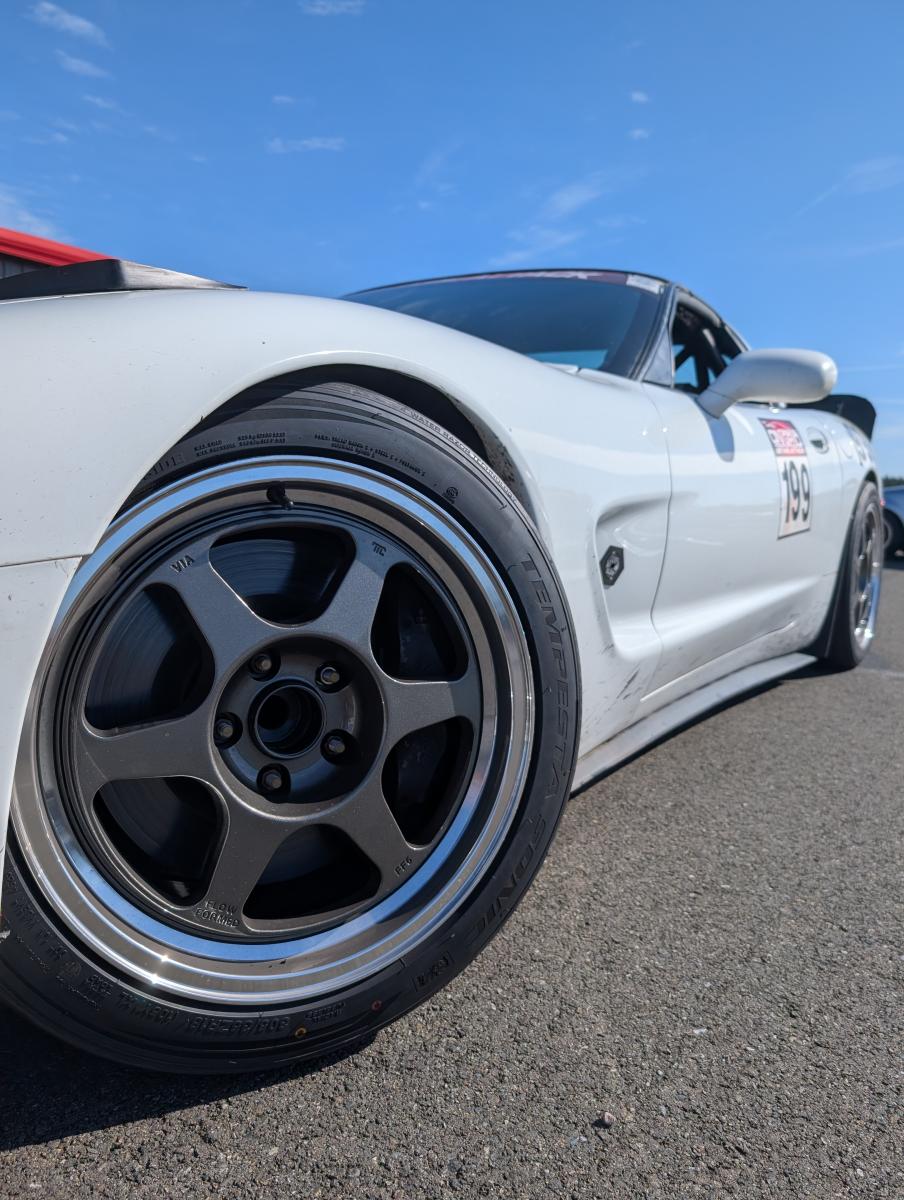
It's no secret that all of the numbers and ratings behind track tires are dubious. Treadwear is a highly debatable value, width is apparently subjective...heck to be honest I think the only reliable number in all of the process is the wheel diameter!
Every few years it seems somebody comes out with their new tire that smokes everybody else, and then the entire field of tires all catch up by making their tires a bit more grippy too. Everyone keeps pushing that bar just a bit further with each successive leap front, to the point tires that were formerly 200tw class winners are now on par with 300tw tires. This also doesn't even factor in the super vs enduro 200tw difference, where a Hankook RS4 will go 15,000 miles and a A052 will go 4,000... but they both "wear the same" if you bo by treadwear.
Such is the game. I didn't make it, I'm just here to shred... and the latest and great shred tire from Vitour comes hot on the heels of their previous category re-defining 200tw tires, so there were big expectations. Would the tires work good? Will they last? How much camber do they require? Do they overheat or go the distance? Do they outlast the 200tw tires somehow!?!?
Well, tag along. I'm going to find out for you this time attack season, as I am one of the first people to run them in North America... and now I'm the first person to cord a pair.
The Short Version

The Vitour Sonic Tempesta is all that and a bag of chips for lap time and felt grip. They put me on the podium several times, I was able to run multiple PB's and the amount of grip they provided was addicting, their heat tolerance was exceptional, and I was a huge fan.
Then the Vitour Sonics failed me. Significantly and near catastrophically. Fortunately not at a timed event as I'd be out of the running or worse... in a wall. Tire temperatures and pressures were confirmed and I've got the data below. Per chats with Dallas Reed over at Vitour, you need be running close to -3.6 degrees of camber apparently to maximize these tires, which is no small feat on the C5 Corvette.
So if you're running a C5 Corvette, or some other platform, prepare to throw a whole lot of camber at the problem, and/or possibly eat through a lot of tires... but your lap times will thank you.
It's worth noting that if this happens to you, there's no warranty. You're SOL. You just spent $2000 to go fast for five track days, some of which are only 3 sessions as they are time attack events.
Personally, I'm going back to the Vitour P01Rs. I can't justify the modifications it would take to run these, nor the costs and risks if I don't perform said modifications to keep running these.


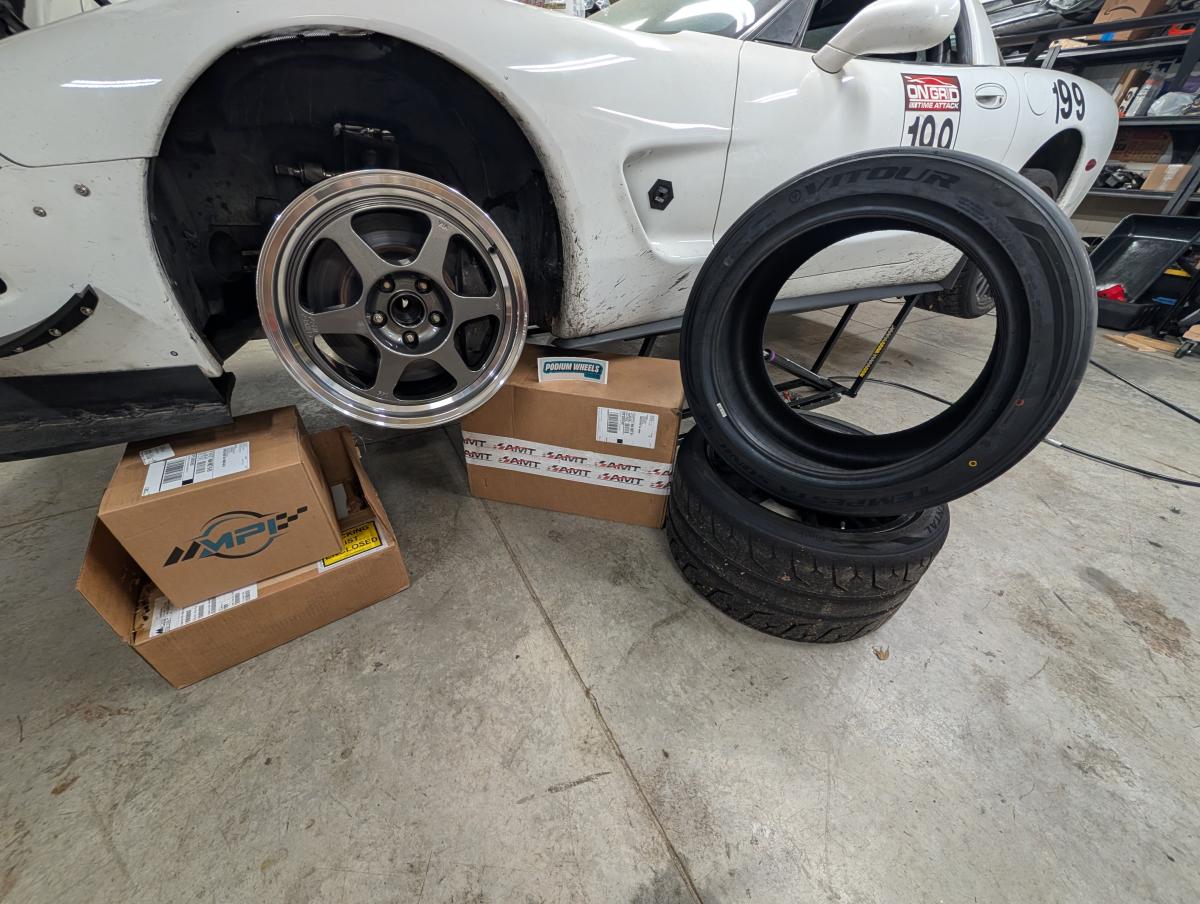
Initial thoughts Receiving & Installing the Tires
Right off the bat, I am running a rather odd size of 305/35R18. Typically C5 Corvette's run 315 squared... but for whatever reason the OnGrid GT class limits you to an average width of 305. Thus, I got the tires in a taller sidewall profile than I think just about anybody will run squared on their C5 Corvette since nobody makes a 305/30R18 that I'm aware of, at least not in a competitive compound.
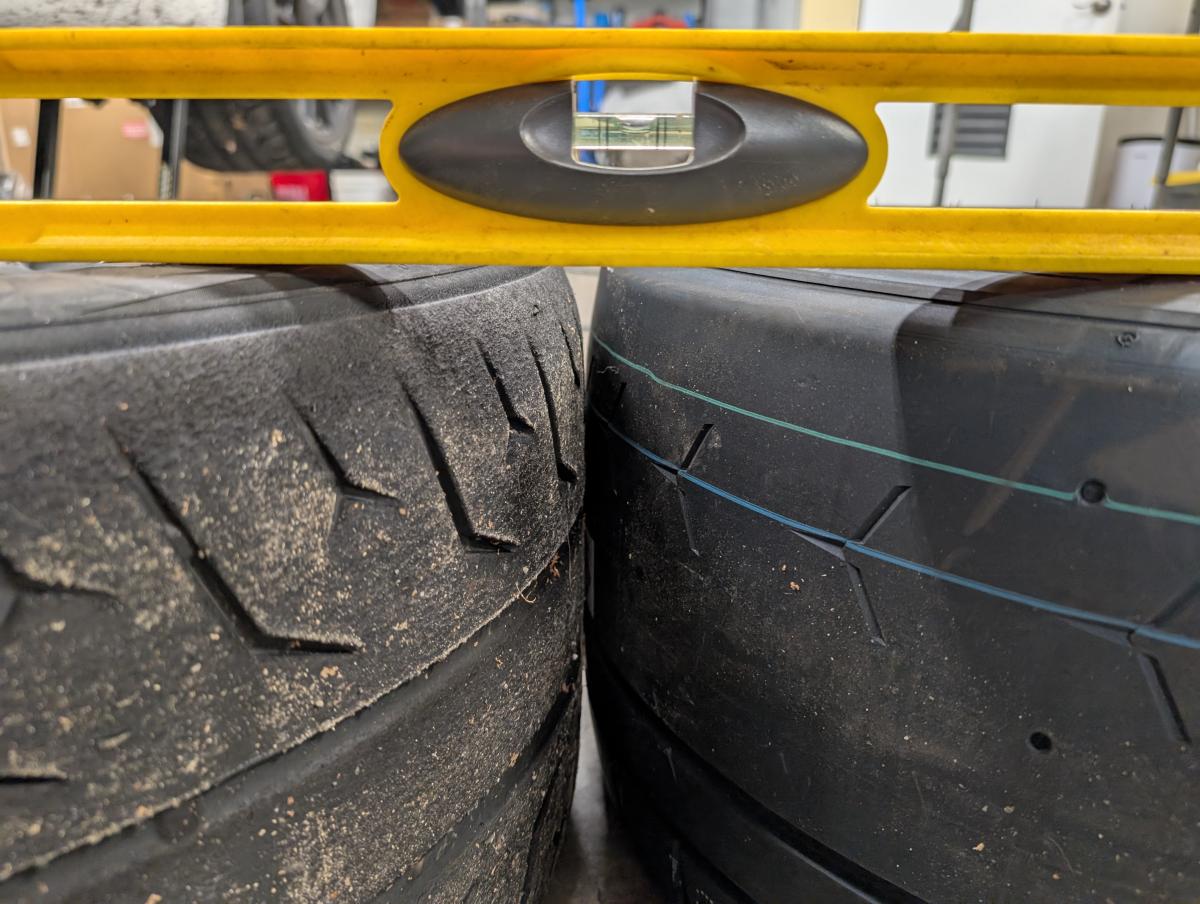
Above on the left are my lapping tires, some Continental Extreme Contact Forces in 315/30R18. Next to them on the right are the Vitour Sonics. Notice anything about the level? Oh yeah... the 315 width Vitour Sonics are ever so SLIGHTLY WIDER! My Conti ECF's also ran wider than the Vitour P1's... so these seem to be some really cheater width tires! I don't make the rules though and since mine say 305 on the side, I can say I am running 305's in my class guilt free.
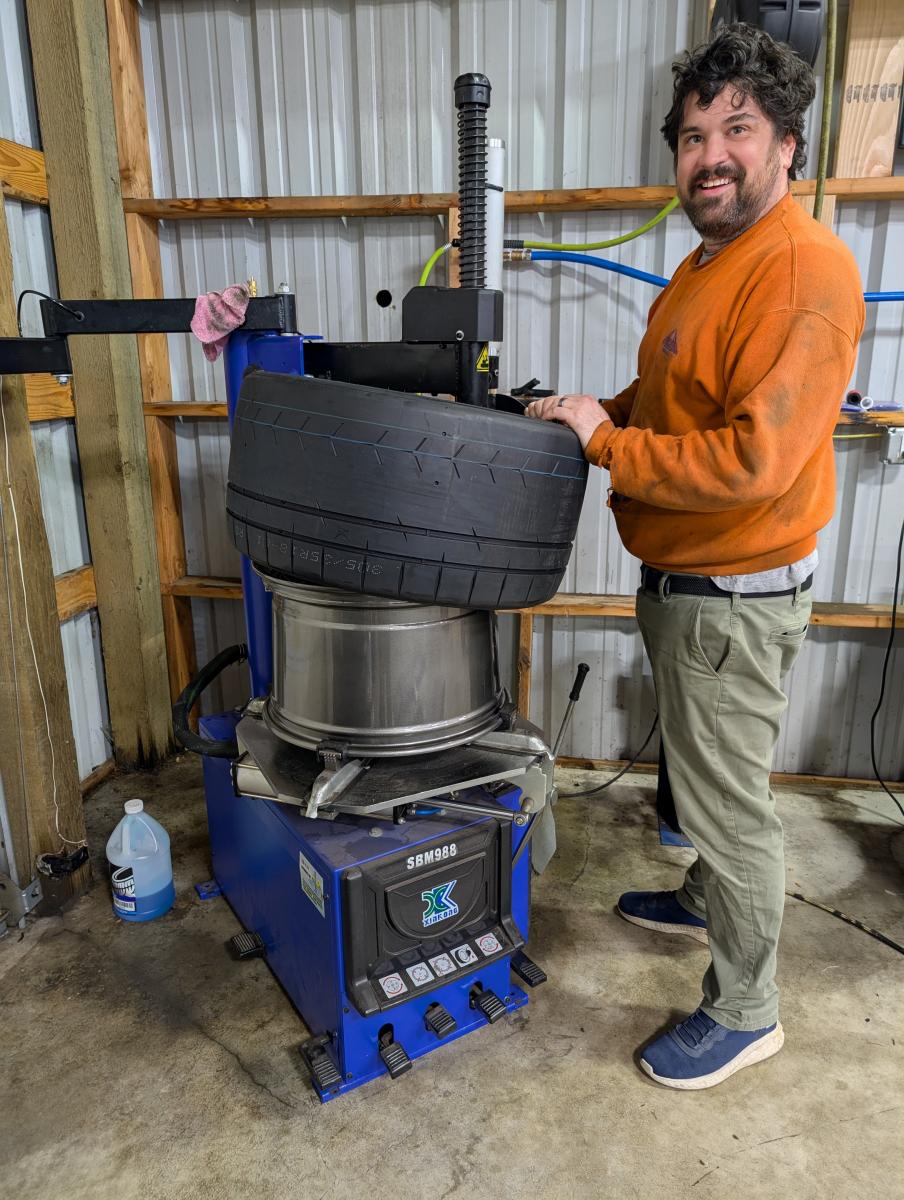
Here's a great picture of just how meaty these tires are. Damien from Fieroline racing is 6 feet tall and that wheel is 11" wide. These tires barely fit on the tire changing machine. I can only imagine the fiasco that shoving these in a 315 would be!
Otherwise... there's nothing that noteworthy to observe during installation and some mild street driving to try and scrub them in. Some folks claim they prefer to be heat cycled in, I have no idea how anyone can claim to know the difference yet on tires that have only existed to the general public for a few months... but hey there's definitely people out there better connect than me in motorsports!
Initial Track Impressions
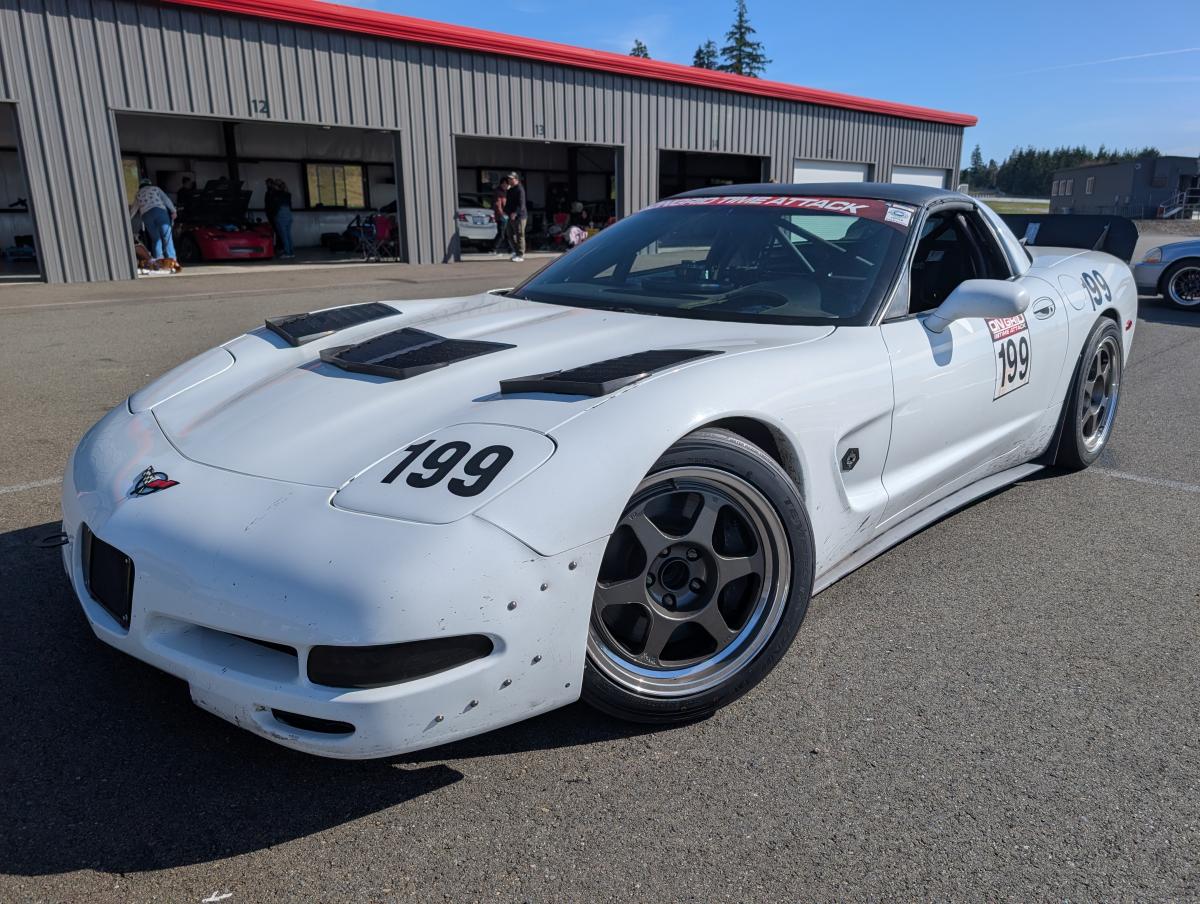
So you'd do well to take any enthusiasts feedback with a grain of salt... because if they're anything like me their car is a constant project, lots of details are changing, they may be moving around class rules, and some details may not be as locked in as others. On my car though I had just dialed in my alingment, I had fresh brakes and rotors with bedded pads, and I had a nice day of cool weather ahead of me on track to shred. I think I've got some decent initial findings to share with folks.
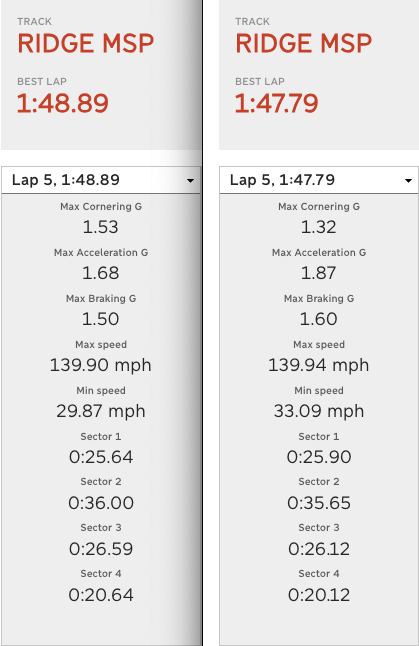
Right off the Bat -- These tires Do Legitimately Shred: I set a PB on that lap though by over one second of time gain (1:47.79 versus 1:48.85), being rusty to driving the car as we were just coming out of winter. These feel great and work well. Now was it other improvements to the car? Possibly... but these were surely in the sauce and it tasted sweet!
Warmup is Slower than the P01Rs and heat tolerance is superior. I found with the Vitour P-01Rs I needed the full out lap and some serious intentional scrubbing to get the tires ready to send it, with the best laps generally being 2-4 for me. However with the Sonics, the outlap was not only inadequate to get the temps up, the second lap still demonstrated they weren't up to temperature. The largest area I felt of conern was on turn in cold the tires would understeer with a skip like feeling through the steering wheel. This quickly went away as temperatures increased, but I could easily get the front to push and skip before that time. For me, my fastest laps were always laps 3-6, and honestly laps 6-7 weren't that bad either, I just had to be intentional with my weigh transfers or I'd find myself in a slightly different location than intended.
This wasn't overly concerning to me as I got lucky in my time attack group and was first on the grid with about 2-3 seconds of time between myself and the next closest person... but if you were gridding with folks who can hammer the track right after the outlap you'e going to be in the way and then suddenly find yourself charging right at them as they are rolling off. Timing wise, this could be a challenge for some folks out there.
Handling on the tires is Excpetional. These feel great, and you can see it in my increased corner G forces and acceleration and braking G force numbers. There wasn't anywhere these didn't out perform the Vitour P01Rs for me... but with that increased limit I did find they were prone to mid corner push at times, leaving me feeling like I was running wider than intended at points. Turn in was also a bit slower, but I think that is more reasonable to attribute to the 35 profile sidewall versus my previous 30 profile. Some of that could be suspension setup as well relative to the increased weight of these tires, as they are surely quite chonky.
The Vitour Sonics Jump a Lot in Pressure. I started my day at 26 PSI after a short drive around the country roads near The Ridge. I went out for my first session set a PB and had a blast, but unfortunately couldn't accurately judge my temperature coming off the track as we had to sit for 5 or so minutes for an all red. Once I returned to the pit, the tires were a reasonable 32 PSI, but I took into account some cooling likely occured and dropped to 30 PSI.
Next session I went out... and didn't match my PB by a quarter second and felt the tires were a lot more pushy mid turn, with a weaker turn in. I figured perhas it was track temps increasing, and returned to the cold pits after an 8/10ths cool down lap. I checked my pressures, and discovered I had now peaked to 37 PSI. That jump is a pretty significant jump, especially from a mostly warm tire... so just what was going on?
I dropped pressures to 32 PSi, went back out and set a time closer to my PB, but still not quite competitive enough. Tire pressures coming off were now 33 psi, and I dropped them yet again to 31.5 all around
Next day I left the track and returned... to find my tire pressures cold at 21 PSI. I've never started my day that cold, but I trusted in the process and went for a long country road drive to get some temps into the tires. After driving 30 minutes round trip to get some gas, I returned and my pressures were a reasonable "go out on track" pressure of 27 PSI.
First session out on day 2 and I returned to find my tires had yet again peaked to 32.5 or so and still had a bit of push. I was within .03 seconds of my PB though so felt I was onto something and decided to drop the tires to 31.5 and go back out. Unfortunately, at this point rain would set in, and as I'd already secured a great time and held 1st place... why push it.
Wear Seems Exceptions Thus Far. Despite my somewhat limited rear camber, and not exactly insane front camber... the tires look to barely be scuffed and to have a lot more life left in them.
Pictures of the tires hot off the track on Day 2
Here are my unadulered shots of my tires after my last and only session of Day 2, provided with no opinion up front so you can judge for yourself.
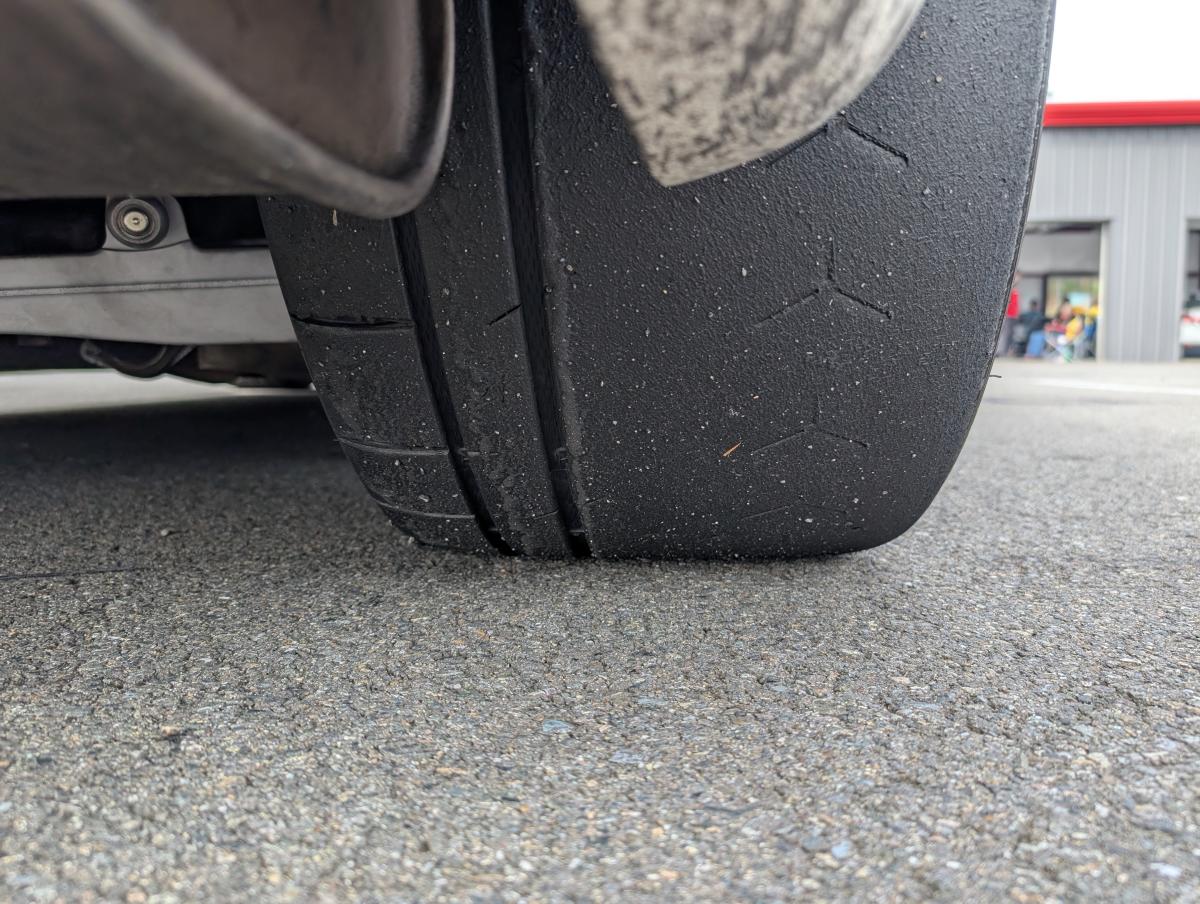
Right rear as viewed from the rear
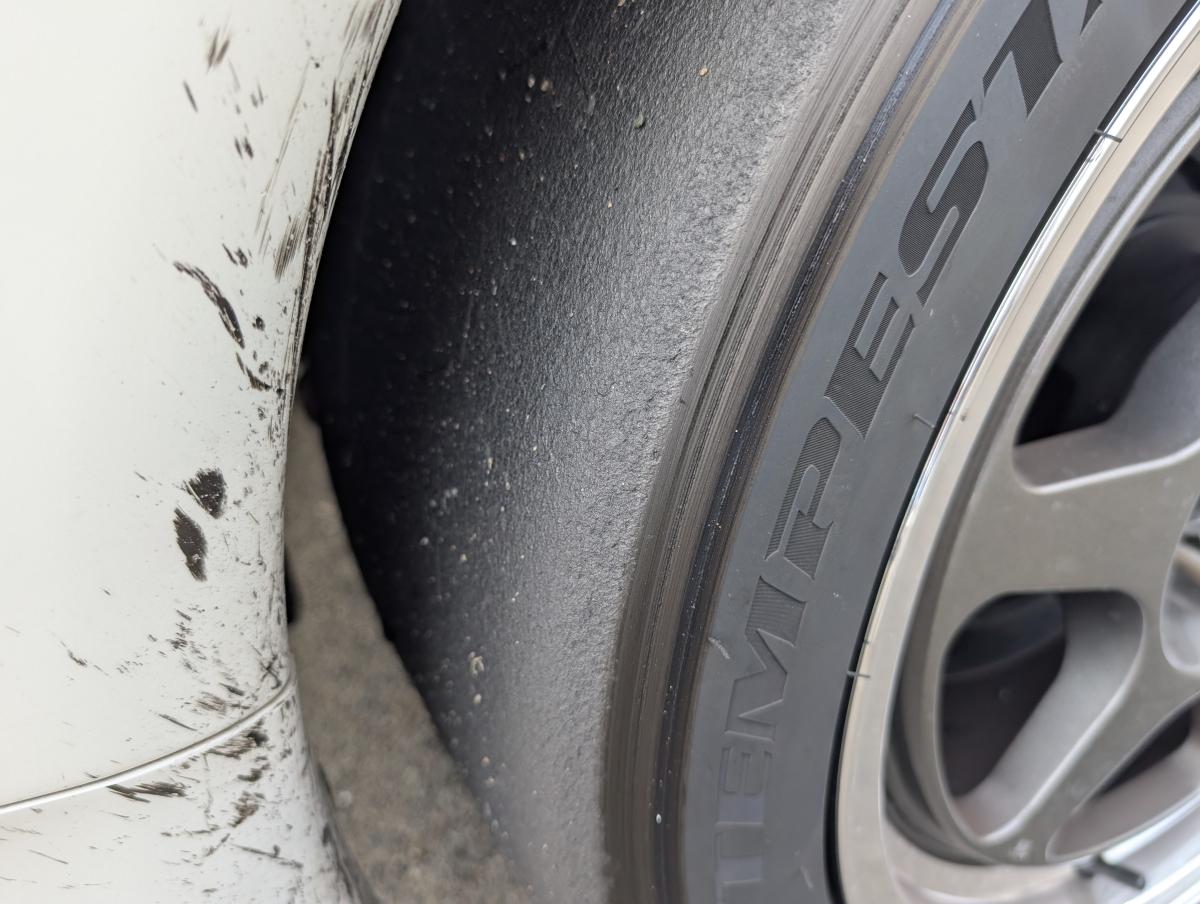
Right rear as viewed from the outside
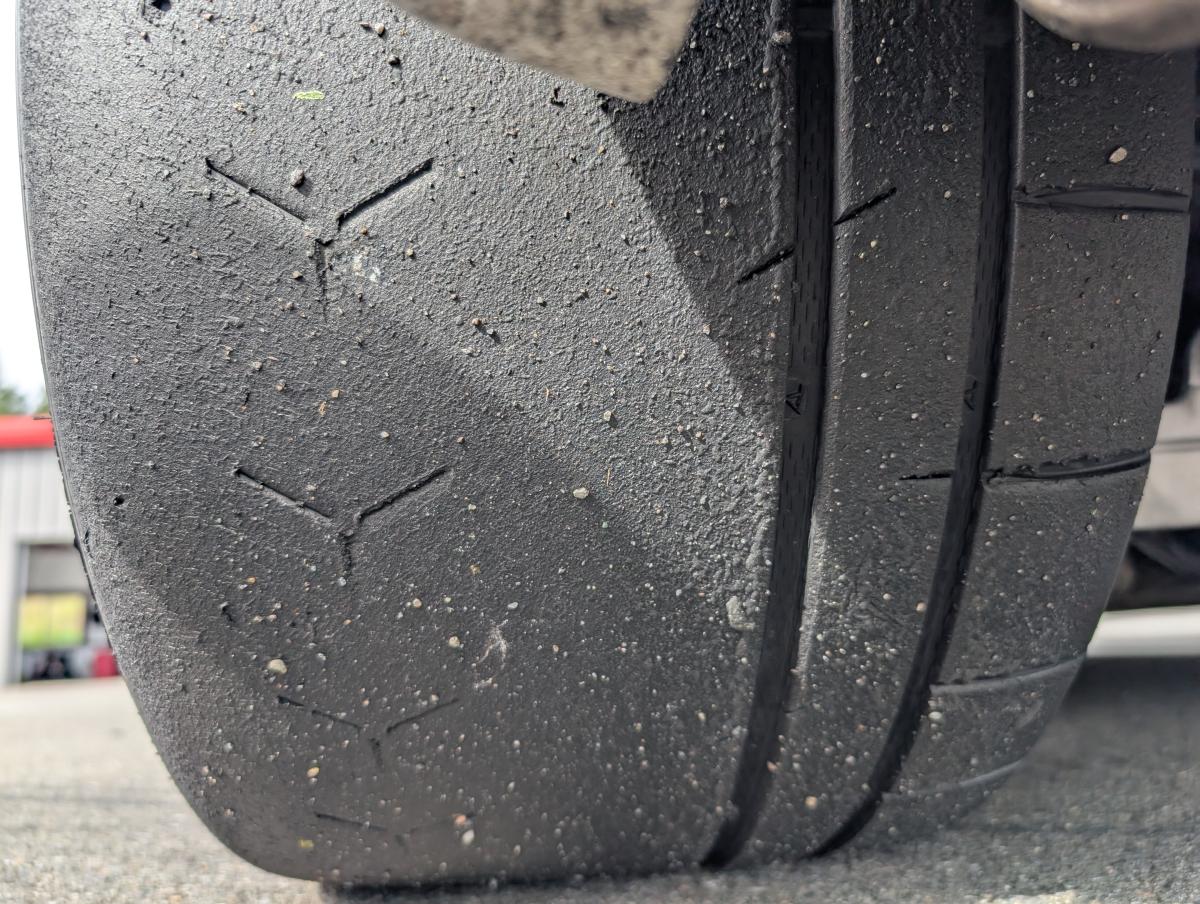
Rear left as viewed from the rear.
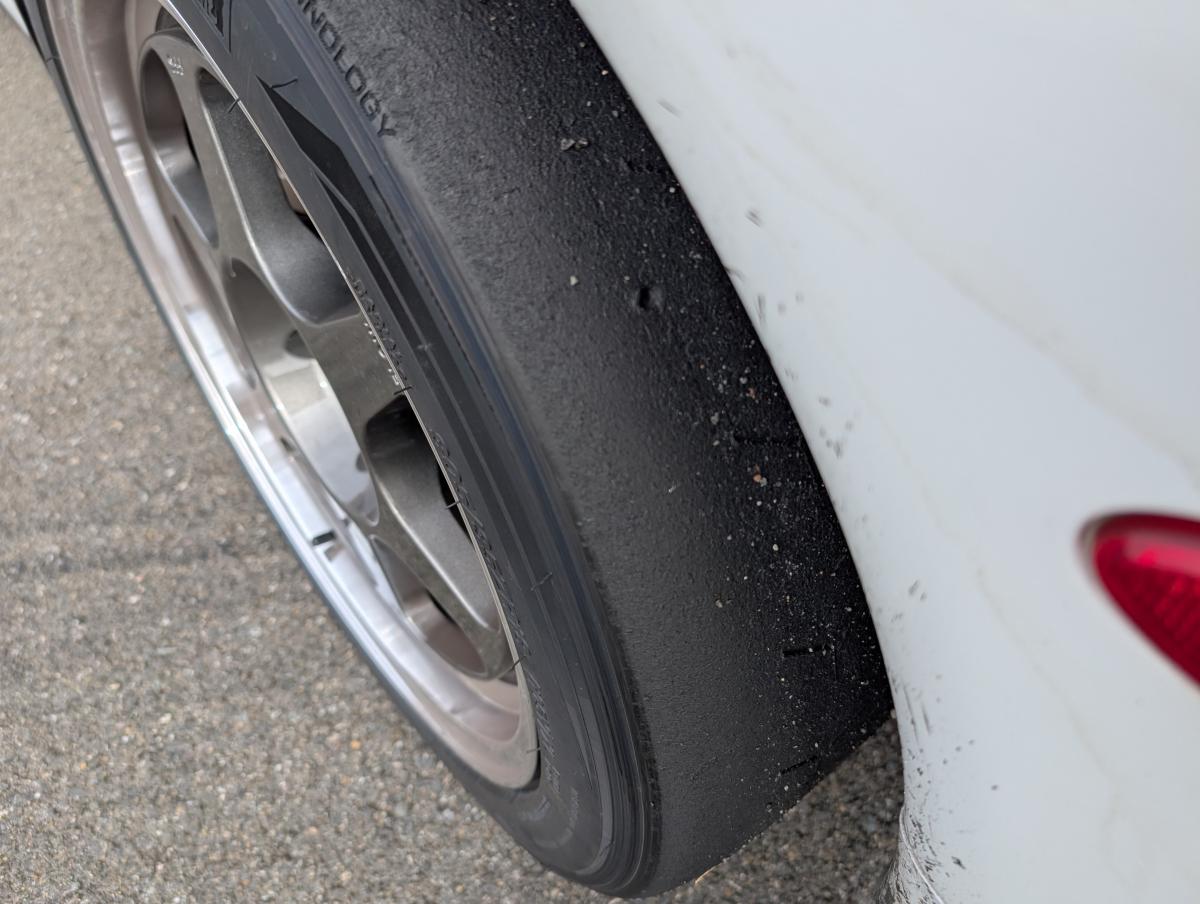
Rear left as viewed from the side.
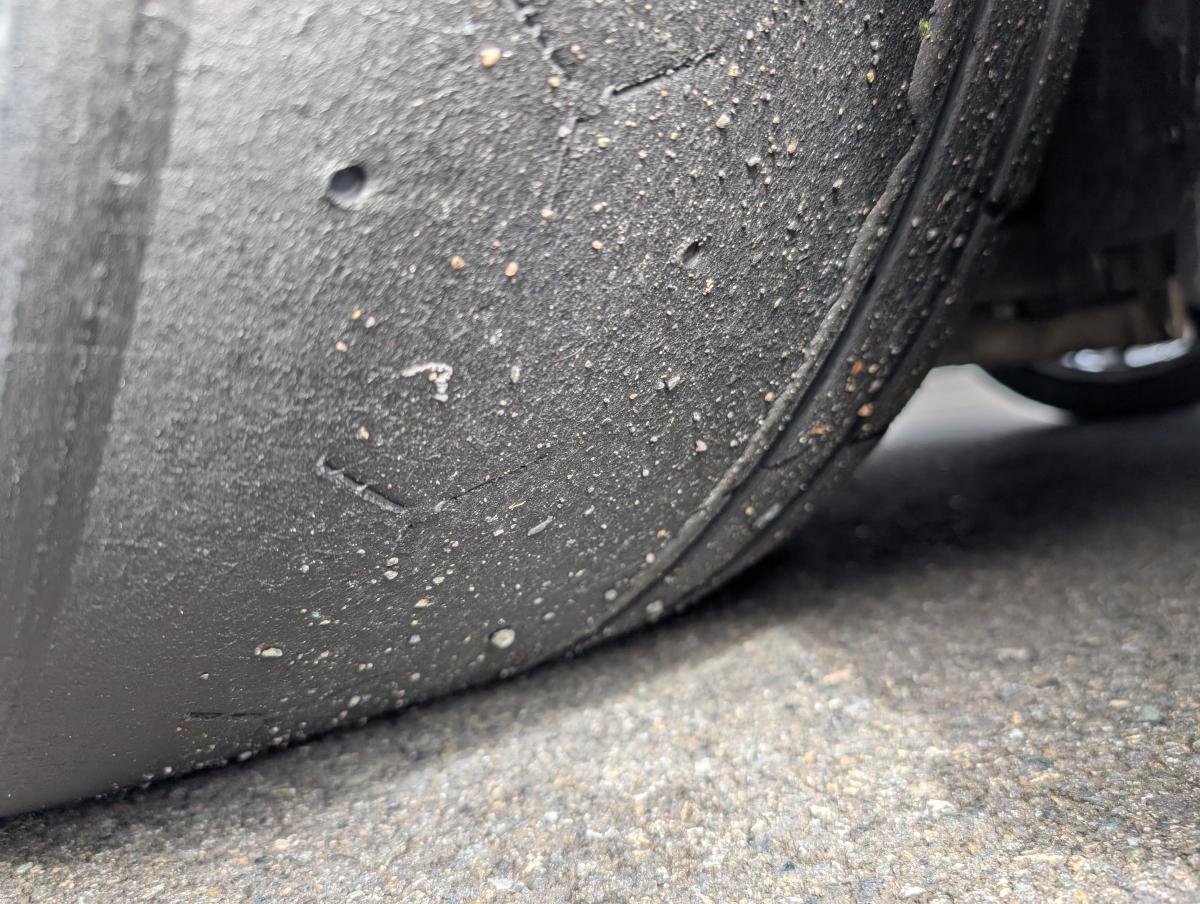
Left front, as viewed from as rearward as I could get a picture.
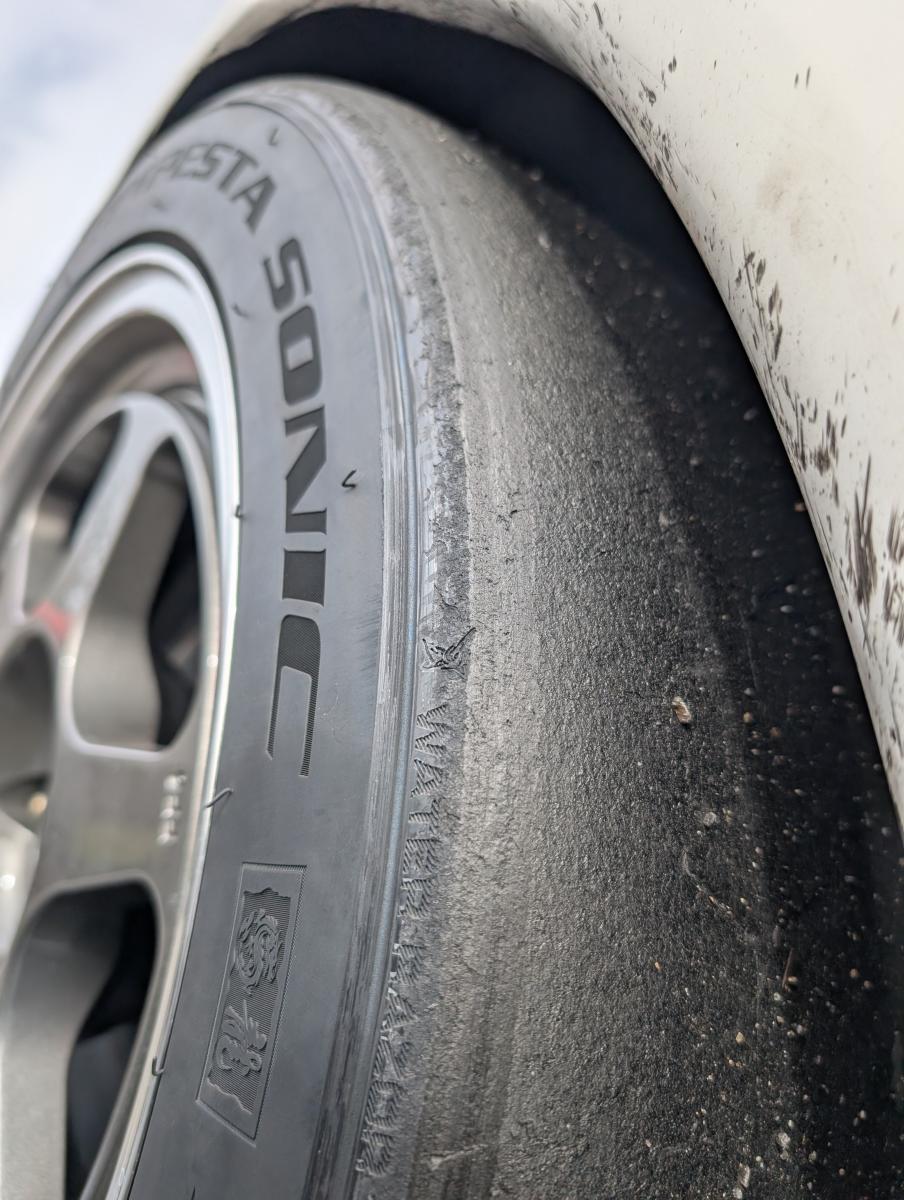
Front Left Tire as viewed from the Side
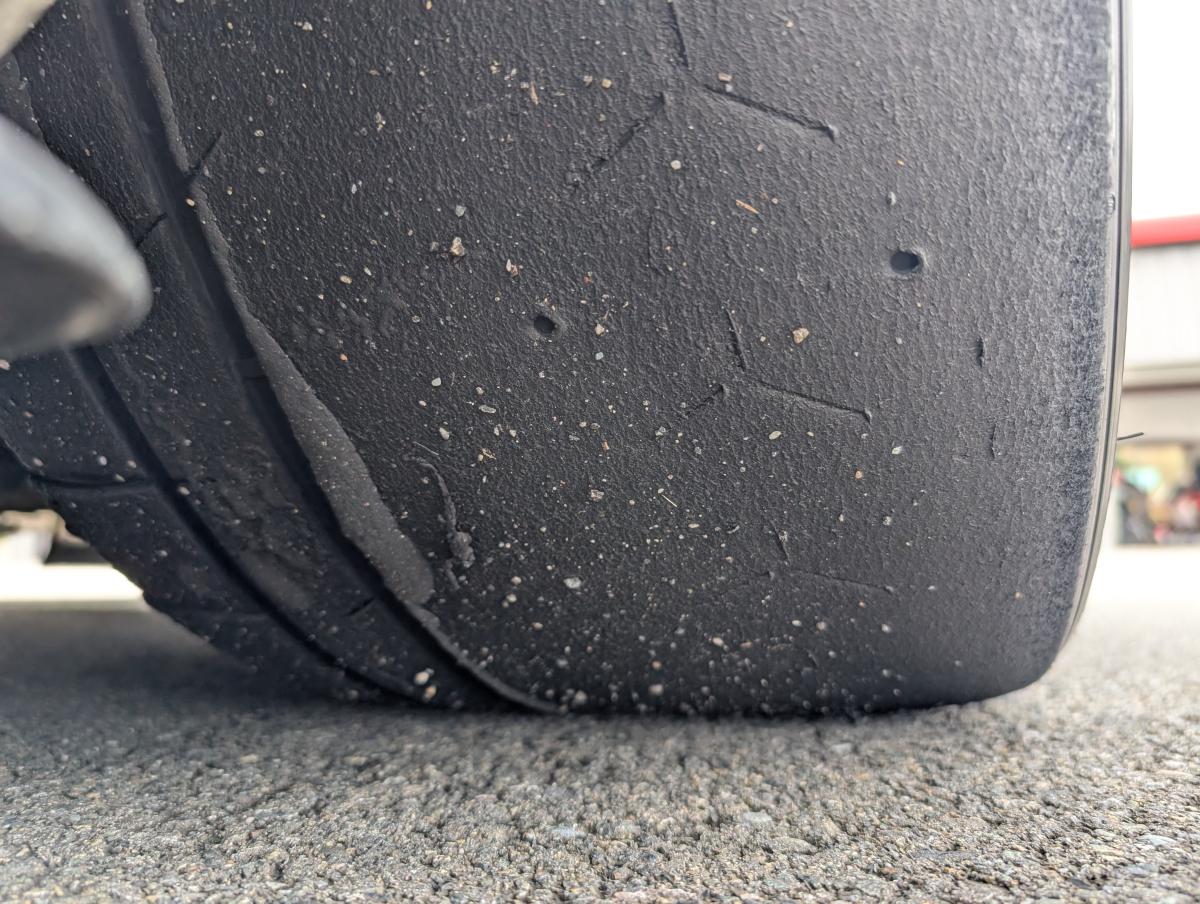
Front right tire as viewed from the rear.
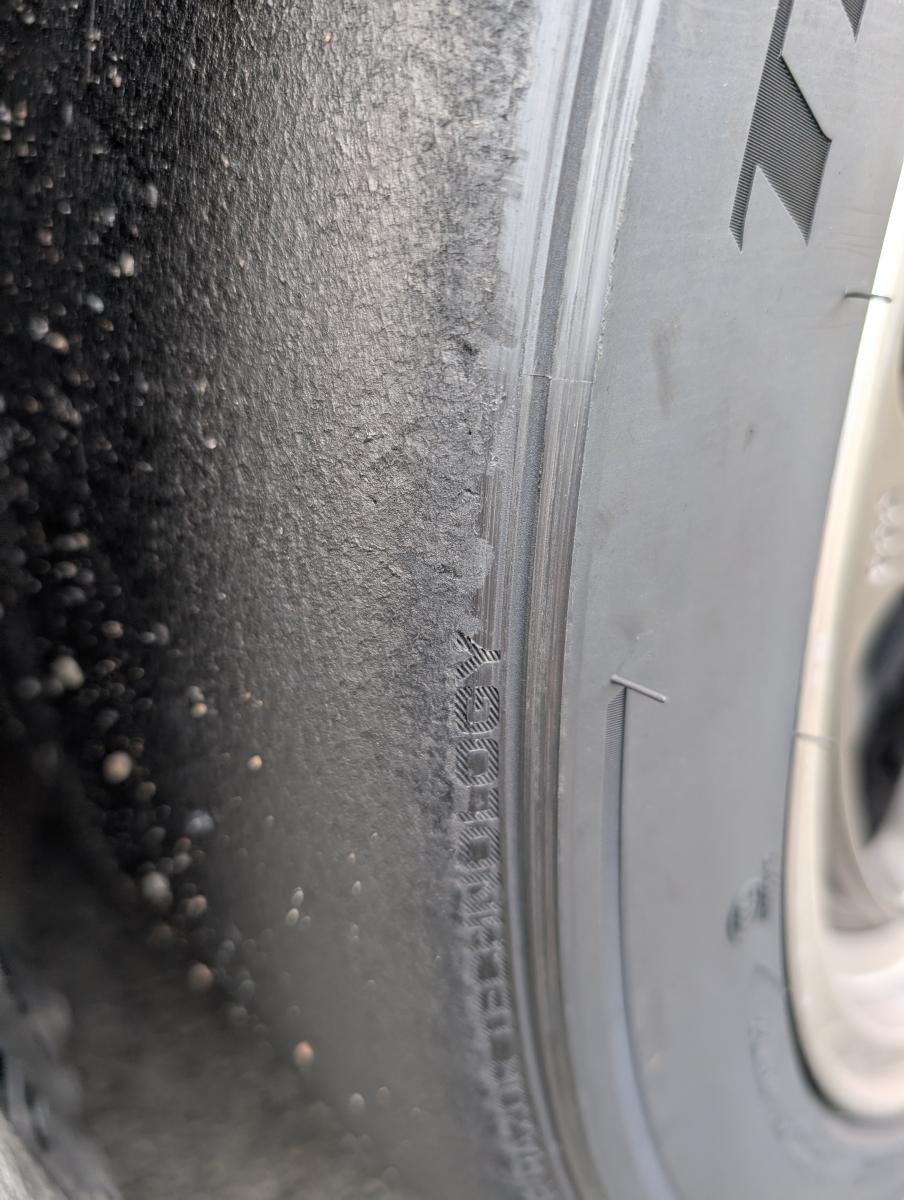
Front right tires, as viewed from the side.
Track Event #3 -- Open Track @ Oregon Raceway Park

A few short weeks after my first test I was able to get the time attack C5 Corvette out to Oregon Raceway Park for an open track day with Skip Day Events. The tires performed EXCEPTIONALLY well here, and given how much this track favors traction and only modestly rewards horsepower, I feel the Sonics really shined.
My previous personal best here was a 1:56.4, and i was able to drop my time to a 1:52.9... though you'll see a Miata got in the mix probably costing me a small portion of time on my way onto the front straight.
...but hold your horses before you start thinking I am saying these tires are 3.5 seconds faster.
My previous PB was set with less track familiarity and only a half day of time in that direction in car, all previous experience running CW was on a sport bike over ten years prior. So familiarity surely played a part. I was also on Continental ECF tires last time, which are not a competitive tire. I figure if you take my previous PB and subtract 1.5 seconds for the jump to a Vitour P1, I'm at 1:54.5... but then subtract another 1.5 seconds from that for the jump to the Sonic... and I'm at 1:53.5... so the numbers do reflect a lot of expected improvements jumping from compounds.

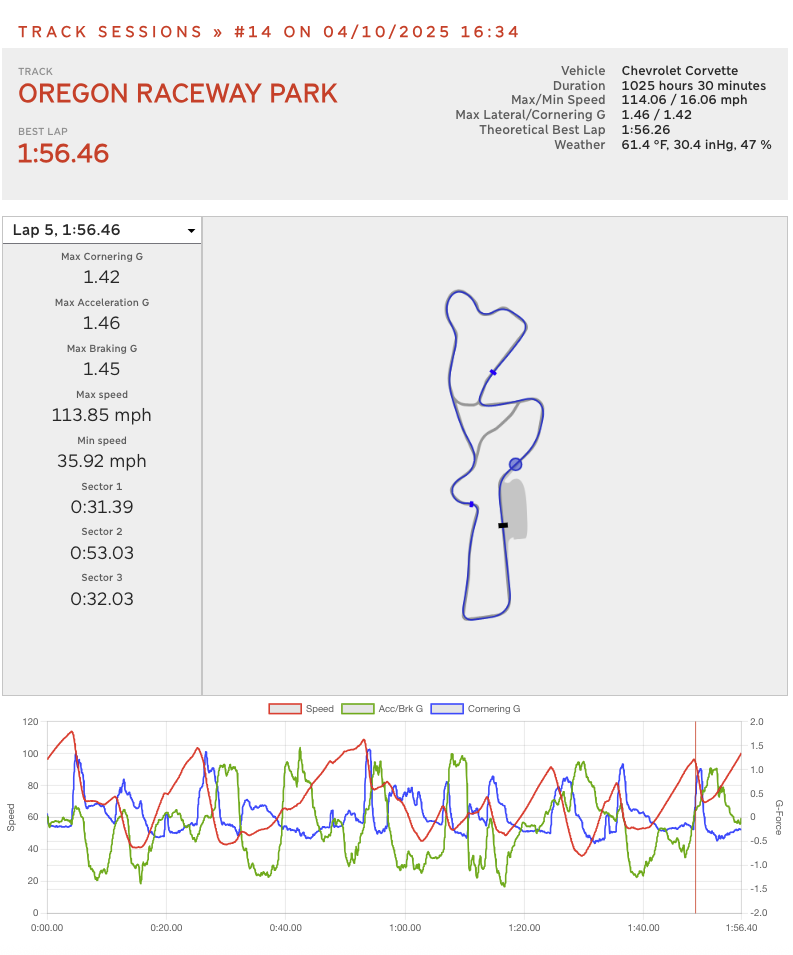
Above is the data from my previous PB on the right, and my new PB on the left. Top speeds were infact DOWN (probably reflected by Miata pass) and my peak G forces cornering were the same. Acceleration G forces were slightly higher, as were braking G-forces. Average speed was up 10% though, which I think reflects my overall experience with the tires well. I was able to hold more group early and through th exit of turns, braking was improved, and peak G-froce at ORP is more limited by the off camber and varying nature of the turns than the actual tire itself.
SO overall, these tires are exceptional, though I am worried about just what is changing to make these tires work in their newly revised 200tw format. I read a lot of how these tires got mediocre feedback on Miatas and other lighter cars... which I can understand, but also I would loathe it if these tires were ruined just to accomodate Miata drivers.
A quick note on pressures, I started with my tires at 21 PSI and jumped up to 33 hot on my outside tires (passenger side for CW). I am seeing massive pressure spikes, and it would seem these tires run hot and are quite happy hot. Given they feel really off cold and will skip understeer... these are really made to get some heat in them!
I wish I had somebody trackside to help me get tire temperatures hot off the track. Coordinating it though without coms and tools has proven challenging. I'll be adding coms to my Corvette soon!
Time Attack Event #2 and an Open Track Day Lead to Near Catastrophic Failure

So if you can't tell by the picture, the Vitour Sonics continued to deliver. I podiumed yet again, and at this event I had some significant competition to fend off. I was able to get out and turn a personal best of 1:47.63 at the event and hold off my competition by over 3/4 of a second. Not too Shabby. Here's the times for anyone interested.
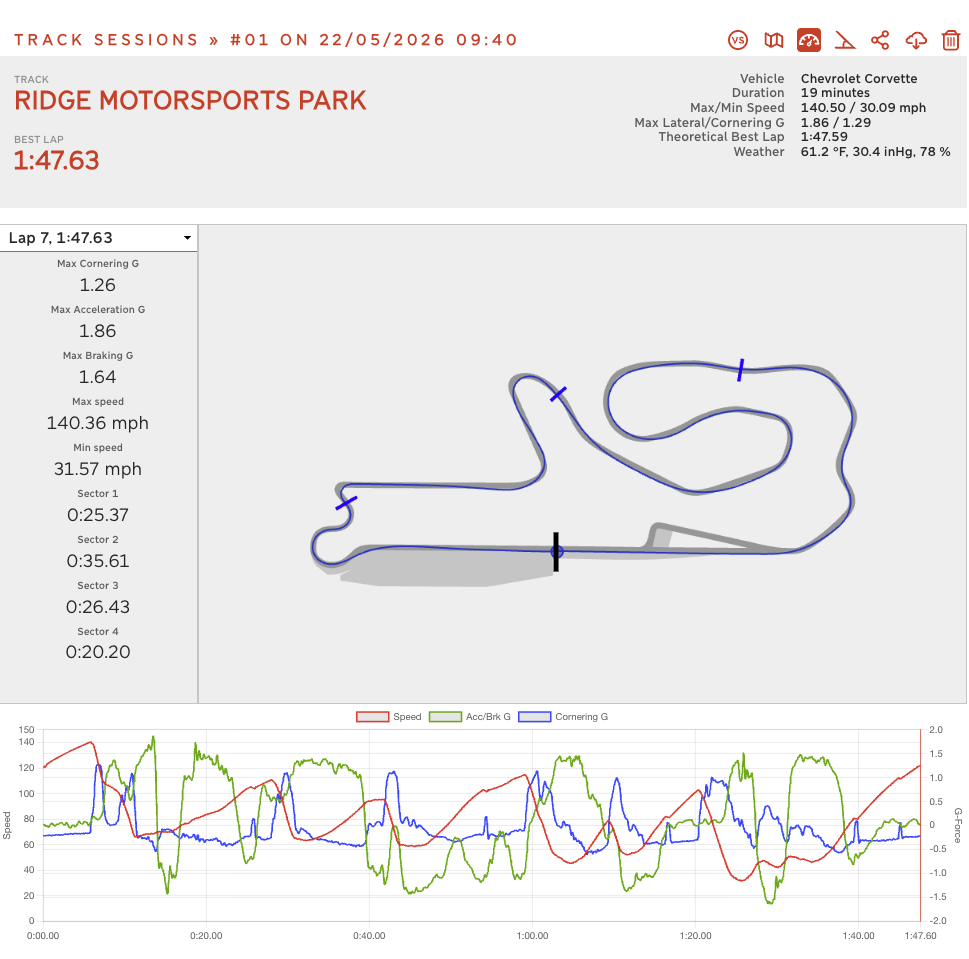
For tire feel, I had the same usual problems. Understeer when cold, running wider than I want on exit, and as they tires got too hot the on throttle grip goet a bit suspect, though I am confident now that I need to replace my diff clutch packs.
I had installed a radio for this event, and was able to coordinate meeting my wife hot off the track so I could get tire pressures immediately. It would be impossible to get more immediate tire pressures than I got short of meeting me on the track.
| Location | Inner | Middle | Outer |
| Front Left | 175 | 160.8 | 140 |
| Rear Left | 197 | 181 | 160 |
| Rear Right | 181 | 177.4 | 165 |
| Front Right | 170.4 | 171.5 | 150 |
These were the values I got. They indicated I had too much camber, which seemed odd as I was running -2.9 degrees in front and -2.6 degrees in the rear. I pulled a bit of camber out at the track at the recommendation of Dallas Reed, and sure enough front grip feel improved. I went back to -2.9 degrees however as I was unable to confirm toe at the field adjusted value.

The next event is the one that really changes the direction for my review of the Vitour Sonics. I took my 1999 C5 Corvette out to Oregon Raceway Park (ORP) to turn some laps during an open lapping event. I had three cars at that event, and was happy for the opportunity to get out in the white time attack car. I was able to turn a few sessions worth of laps before lunch, and grip was okay but still struggling a bit, and then I could tell the tires were clearly overheating, so I rolled back and brought it back in.

That's when we noticed there was significant peeling on the outside my tires, several points all the way down to the threads. This seemed odd to me as I wasn't running even within two seconds of my personal best, I was in traffic and just having fun, following friends around, harassing fancy cars that though they were fast, just the usual have fun lapping day sort of shennanigans. I chalked it up to a warranty issue and fortunately had two other cars to keep having with for my day.

When I got home though I disocvered the failiure was FAR worse than picture. See below, where 1/4 of the section width of the tire seeming sluffed off!

I decided to measure just how much had sluffed off the side of the tire, and it was 2.63mm. That may not sound like much, but the Sonics tread depth is 5/32 from the factory, or 3.968mm. so if you do the math that's 66% of my tread depth remaining!
I reached out to Dallas Reed directly on the matter, and apparently I'm the first person in North America to cord a set of these tires, so that's a fun claim to fame, but also a bummer since I paid for these out of pocket, though with a modest and apprecaited discount. Per conversation, other teams were finding they actually needed far more camber, to the tune of -3.6 degrees to -4 degrees.

I reviewed the other tires and shared pictures with Dallas. All 4 tires were showing peeling on the outside edge, even tires that were on the less loaded inside when running ORP in the direction I was going.
In Summary: An amazing tire, if You Can Get the Camber Needed.

At this point I think I can Summarize The Vitour Sonic's... at least in their 100tw Configuration, which as best as I can get information on is identical to the 200tw version save for a bit of siping. They're great, even if you aren't setup to run the positively massive amount of camber they apparently require. Unfortunately, they apparently won't last if you can't get that amount, they have demonstrated to fail near catastrophically when you aren't there, and with little to no notice from any analysis of the tires themselves, nor from your tire temperature readings.
Run them, but be prepared to set them up right, and then check them judiscously.