Baofeng UV-22 HAM Radio (and GMRS???)
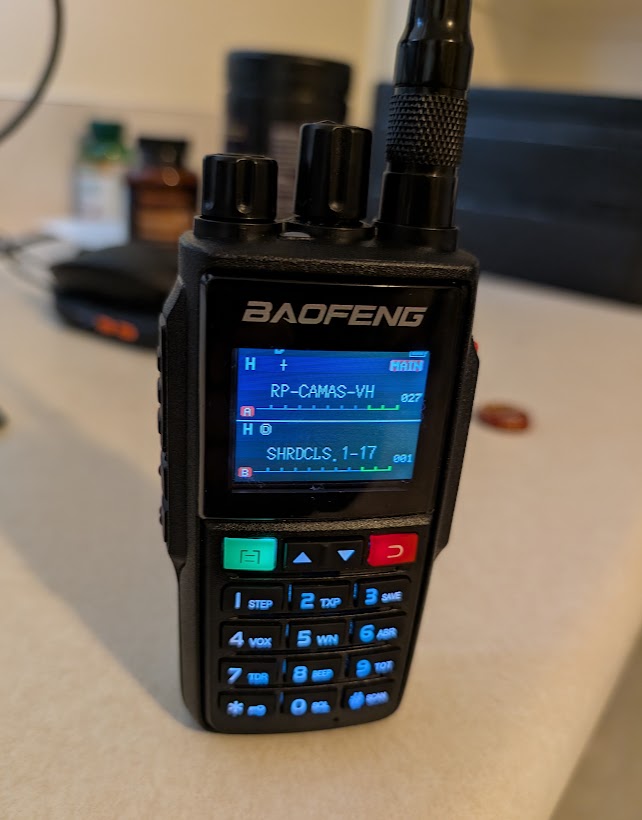
Link to purchase this radio: Baofeng UV-22 on Amazon
Quick Summary: Cheap radio made even cheaper because it includes accessories you may need anyways for other Baofeng. CHIRP programmable, can operate on GMRS* with no modifications or mars mod needed... it's got potential, but I am sorting through it and it sure as heck isn't waterproof, I'd barely call it water resistant.
The Full Story Of How I got here:
HAM radio loves it's gatekeeping. Whether it's the absurdity of the questions you are asked on the technicians license exam or the generally high cost of entry for the radios most enthusiasts approve of... there's a barrier of entry to the hobby.
Baofeng is breaking down that barrier with some pretty killer and very affordable handheld radios, such as the UV-5R mini (which I need to review soon. At $35 or so for a set of two radios, that can do VHF/UHF and GMRS frequencies*, all without any custom modification... these radios are taking the market by storm!
For me, the progression onwards from the UV-5R to another radio came with a lot of desired requirements.
- Simple UI - The exceptionally simple and friendly UI of the UV-5R was important
- I want a radio with at least moderate waterproofing for my outdoor use cases.
- If the radio can't be guaranteed to survive an outdoor adventure... I'd prefer it were priced disposably.
- Size matters. I as I am taking this on adventures like skiing or mountian biking. Hauling up a brick sized radio wasn't going to fly.
- I need dual watch/listen so I can have my wife on GMRS* on B and a nearby ham repeater on A.
- CHIRP programmability as I'm already in that ecosystem and it's easy to work with.
- MARS moddable or GMRS capable* (is there a consumer who doesn't want options from a potential survival tool?)
- USB-C chargeable, because if SHTF and I didn't bring my unique charger... I don't want to be stuck with a radio I can't charge!
These reasonable requirements left me with a pretty narrow selection of units. It was either one of two very expensive Yaesu options (one of which I'll be getting and comparing) or... the Baofeng UV 22.
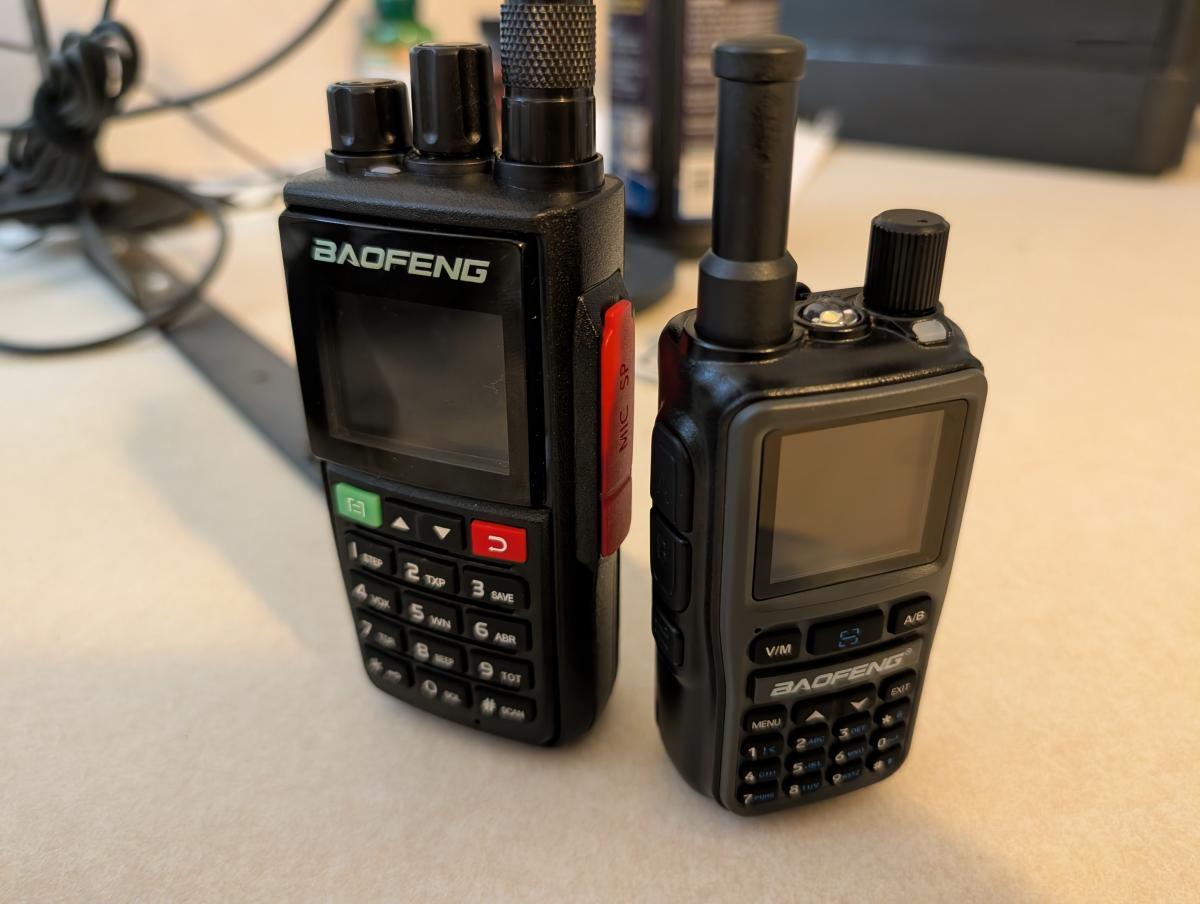
Why the UV-22 Checks a LOT of the right boxes
- CHEAP at $34 (less if you factor in it includes the $9 cable you'd likely buy for the UV-5R mini anyways) ++
- Compact compared to many other options, still bigger than the Yaesu's I'll compare --
- Dual A/B +
- A nice large display that compares closest to the Yaesu FT-5DR (in some ways I'd say it's superior) +++
- GMRS capable* out of the box +++
- Supposedly waterproof (it's not) but cheap enough that I don't care if it dies. --
- CHIRP programmable it turns out (keep reading) +++
- Reasonable to navigate menu (though the UV-5R mini is still easier) +
- USB-C chargeable. +++
Tally: 12 points!
Yaesu VX-6R
- $285 with MARS mod (8x more expensive) -
- Dual A/B +
- Compact Size +++
- IPX7 rated for submersion and impact and decades of sucess stories ++++++
- 1990s grade display -----
- Not CHIRP compatbile ---
- Additional cost of FT RT cable and software --
- Unique charging cable, no USB-C ---
- MARS Moddable +
Tally: negative four.
Yaesu FT-5DR
- $475 with MARS mod (13x more expensive) ---
- Dual A/B +
- Smaller than UV-22 but bigger than VX-6R ++
- IPX7 rated but not as tested +++
- Not CHIRP compatbile ---
- Good display with modern menu, but freq centric +++
- Cost of FT RT cable and software ---
- Unique charging cable, no USB-C ---
- Modern Digital GPS and APRS +++
- Mars Modable +
Tally: negative three.
So the UV-22 in theory compares quite favorably to the other units... but what remains to be seen is if it's legitimate or not. Given the price was cheap enough, I figured I'd pick up the radio, see what it's about, and leave a review for you all!
Initial Thoughts on the Baofeng UV-22 & Comparison to the UV-5R Mini
So if you're looking at this radio you likely are considering or already own the highly debated but near universally adored UV-5R mini. The most obvious immediate difference is the the Baofeng UV-22 is of course bigger. There's pros and cons to that, as the UV-22 benefits from normal human size buttons and a screen big enough most humans can easily read it, but it also weighs a bit more and takes up more space.
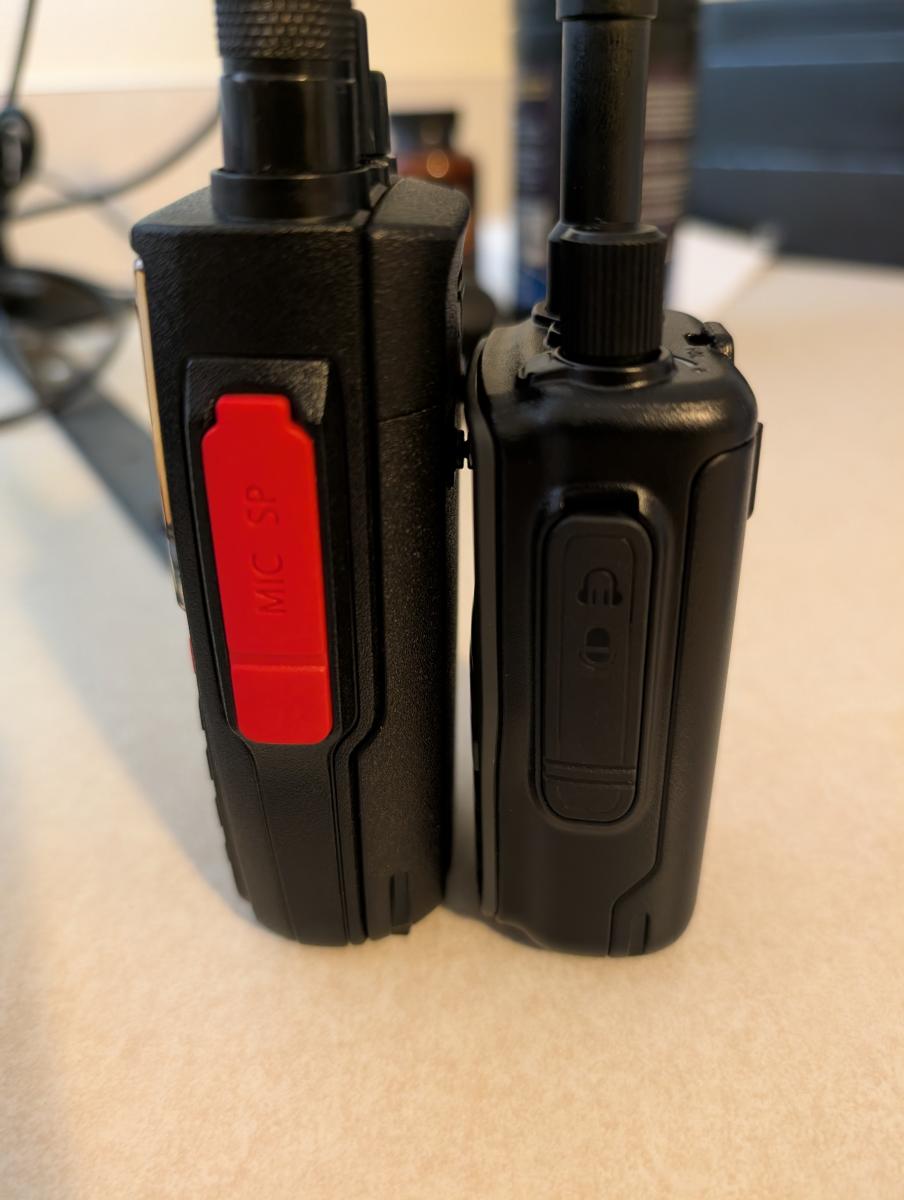
The Baofeng UV-22 also got a bigger battery, so we can assume a slightly longer life as well. While the UV-5R mini dissappears in a pack, you'll know the Baofeng UV-22 is there. That said, it's not exactly that much more weight and the dimensions are still pretty compact for a radio. I'd say the UV-22 is compact, and the mini is sub-compact.
Initial transmission tests were performed and my wife reported the transmission quality was superior to that of the UV-5R mini... so that's a win! With the radio seemingly being decent, it was time to program in some local repeaters and channels and test everything out!
CHIRP Programming The Radio - Yes It Can Be Done!
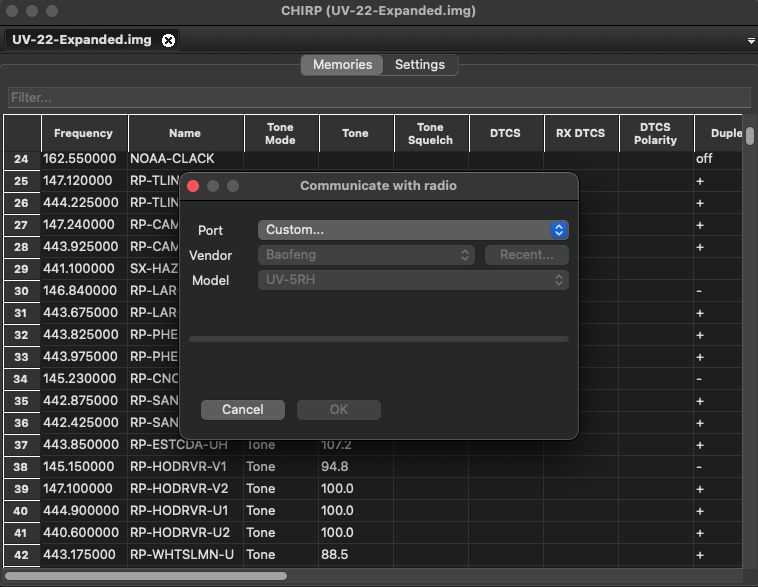
So there isn't any good documentaiton out there on CHIRP programming the UV-22 radio, and most folks say it's not possible, and many more say it's risky... well, so allow me to demonstrate that's not the case! This radio CAN be programemed with CHIRP. I've done it, I know for a fact it's possible, and the experience is quite nice, especially if you primarily operate in the CHIRP environment like you probably already do for the UV-5R mini!
So to start with, you need a USB cable for connecting to your phone which costs $8.59. The UV-22 ships with that cable already however, so consider the radio $8.59 cheaper if you need the cable already for your UV-5R mini!
Begin by READING your radio with the read feature. It'll ask for the vendor and model, and select Baofeng and the UV-5RH. Why the UV-5RH? Welp it shares a lot in common with that radio... so they likely reused 90% of the same parts assembling this one and thus there's crossover between the two, just with a reduced 5W output instead of 10W output, which also explains the reduced size.
Next up, program in a few channels, ideally adding some local repeaters near you as found on Repeaterbook and maybe even adding in GMRS channels* if you so choose.
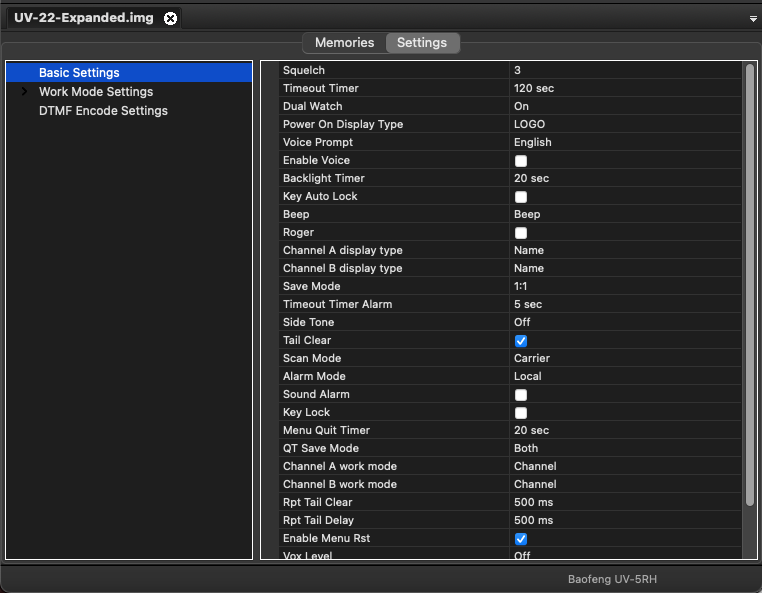
With the initial state read and saved, don't forget to click the settings tab at the top! I find it is nearly always worth making some adjustments like DO NOT enable voice (it's annoying), adjust menu quit timer so you aren't getting kicked out of a menu if you stop to think, and set the backlight timer to a similar time as menu kick out so it all just chills out at once.
Next up, WRITE to the radio. You'll do so by clicking Radio > Upload to radio. It'll prompt you for a few basics, you'll click continue, it'll prompt you of the order to follow on the radio (which I've found to matter less than advertised) and... you've succesfully written to your radio using CHIRP!
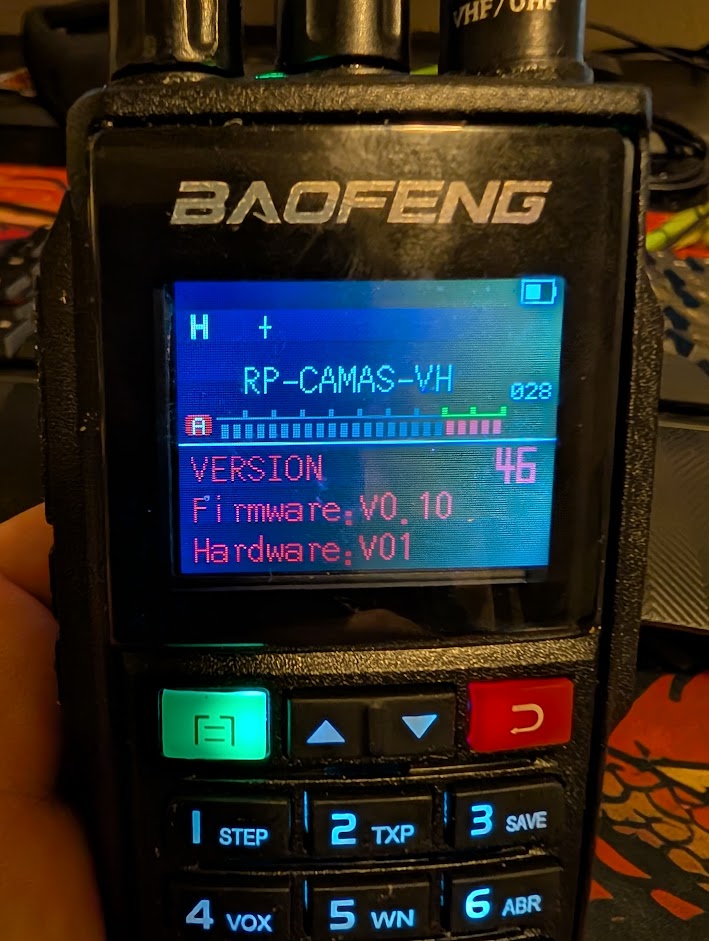
Some folks are reporting they aren't able to use the UV5RH upload settings and show their version as 1.0 for botth and were unable to make it work. So... your mileage may vary, but my version is 0.1 and brand new, their version is 1.0. They found with their version 1.0 that the Baofeng H802 worked for them... so if UV5RH fails, try that next!
Initial Testing Woes
After I programmed my channels in, I went right on over to test the RX abilities of this radio, starting with the ever safe NOAA weather. Unfortunately, I immediately had issues. The audio came in very choppy for some reason. Even listening to my local NOAA weather it would cut in and out. Squelch being turned off helped... but I would soon discover the SMA connection for the antenna was a bit loose and waving the radio around reliably caused audio to drop intermittently.
Given I'm by no means a radio expert, I consulted AI, and they mentioned it was possible the SMA connection to the motherboard wasn't sorted and/or lacked enough strain relief. Given the radio was $35... I figured why not take it apart and see if I could do anything about it. I can solder and do a few other basics, let's see what happens if I strike out on my own with this puppy.
Teardown, and "Upgrading"
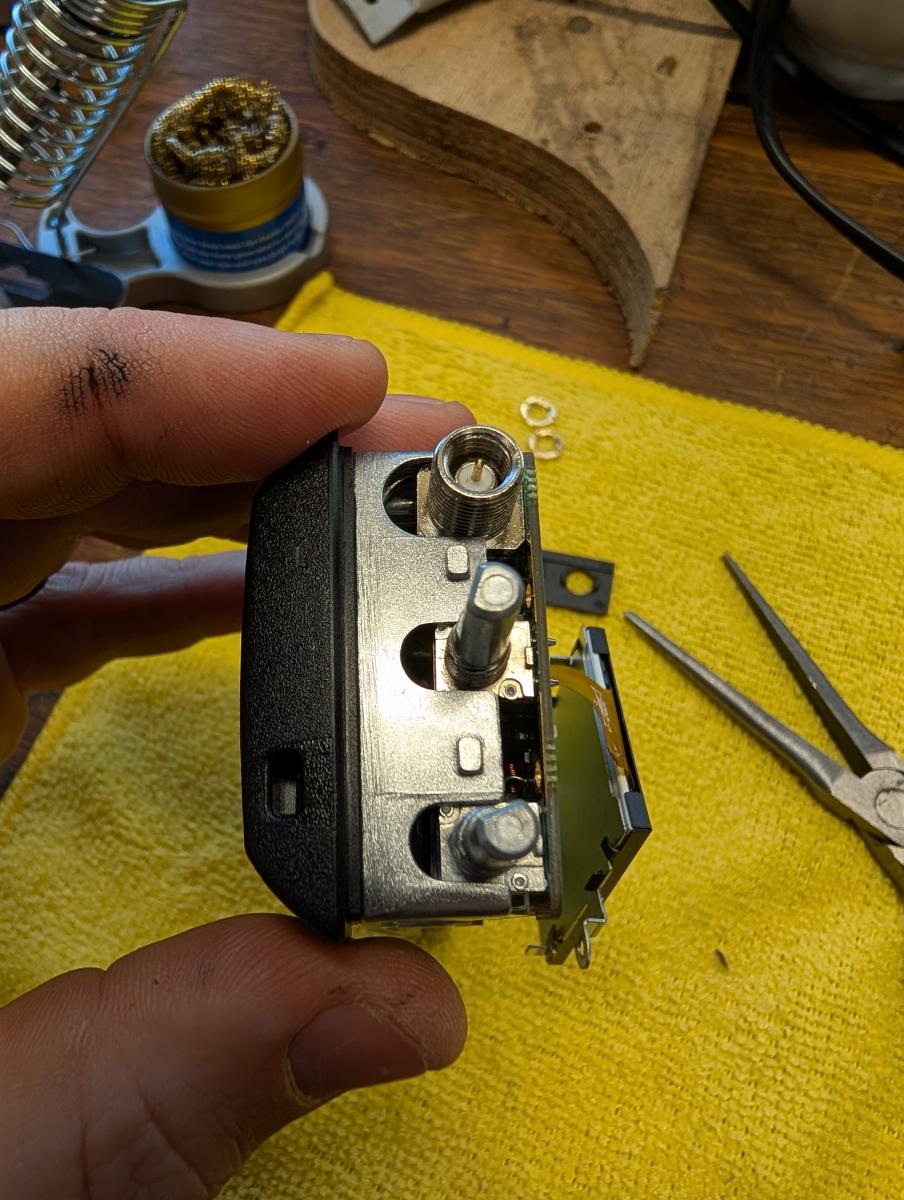
The frame itself is a nice aluminum frame which is cool. The knobs and SMA connector slit into the frame to support it, but... the fitment is pretty meh and not terribly confidence inspiring At this point let me also confirm that this case has just about nothing for waterproofing. The knobs, the microphone holes, the whole case has no O-rings and in general mating surfaces were not gasketed. There's no way in heck this is waterproof. There's a bit of a snug fit between the plastic case and the aluminum frame that a splash of water may not get through... but yeah this isn't a legitimately waterproof product.
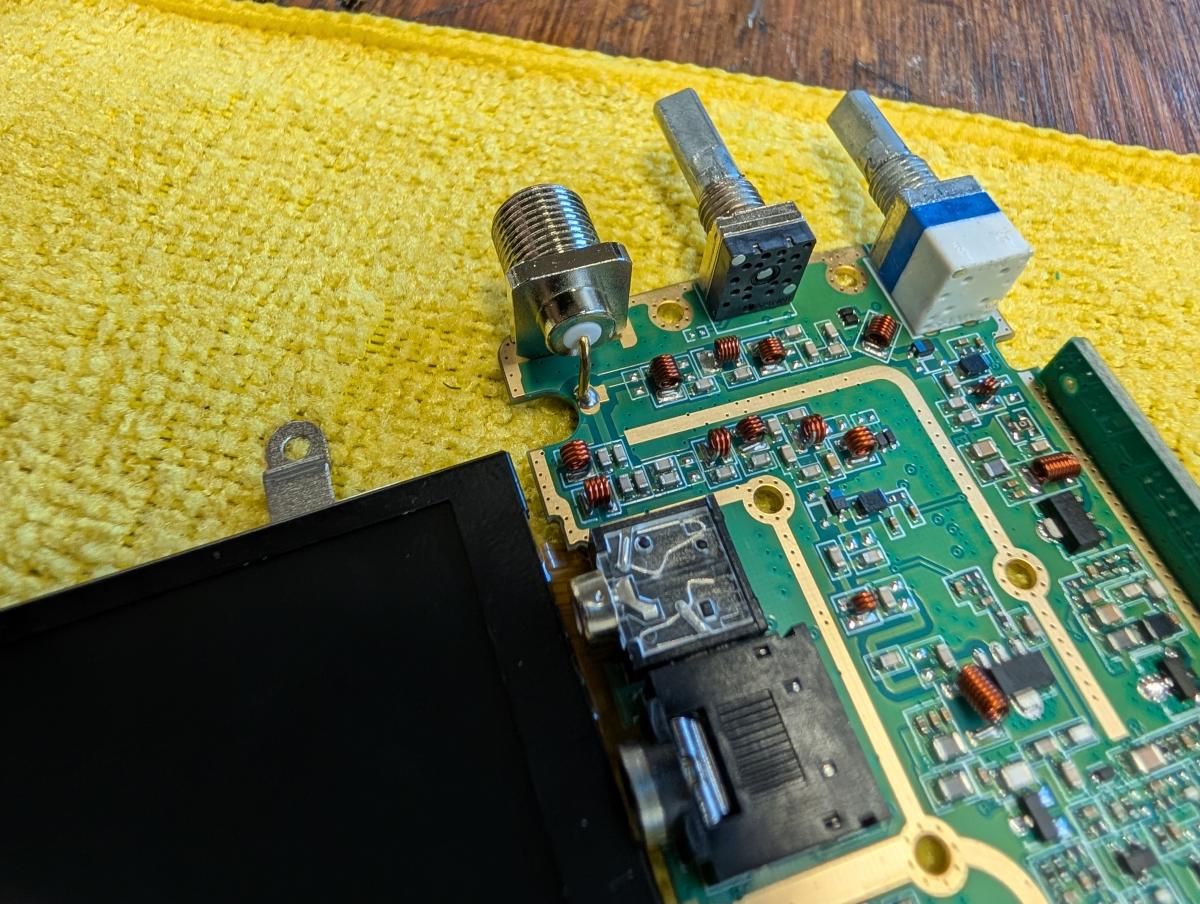
above you can see the attachment of the SMA connector to the board and its... a modest glob of solder. Now I'm told this isn't exactly crazy, apparently a more substantial bit of solder would allow the stress to be transferred to the printeed circuit board...and so it's infact superior that this isn't overly attached. I can't say for certain if that's the case or not... but I'm generally of the opinion that there's no kill like overkill!
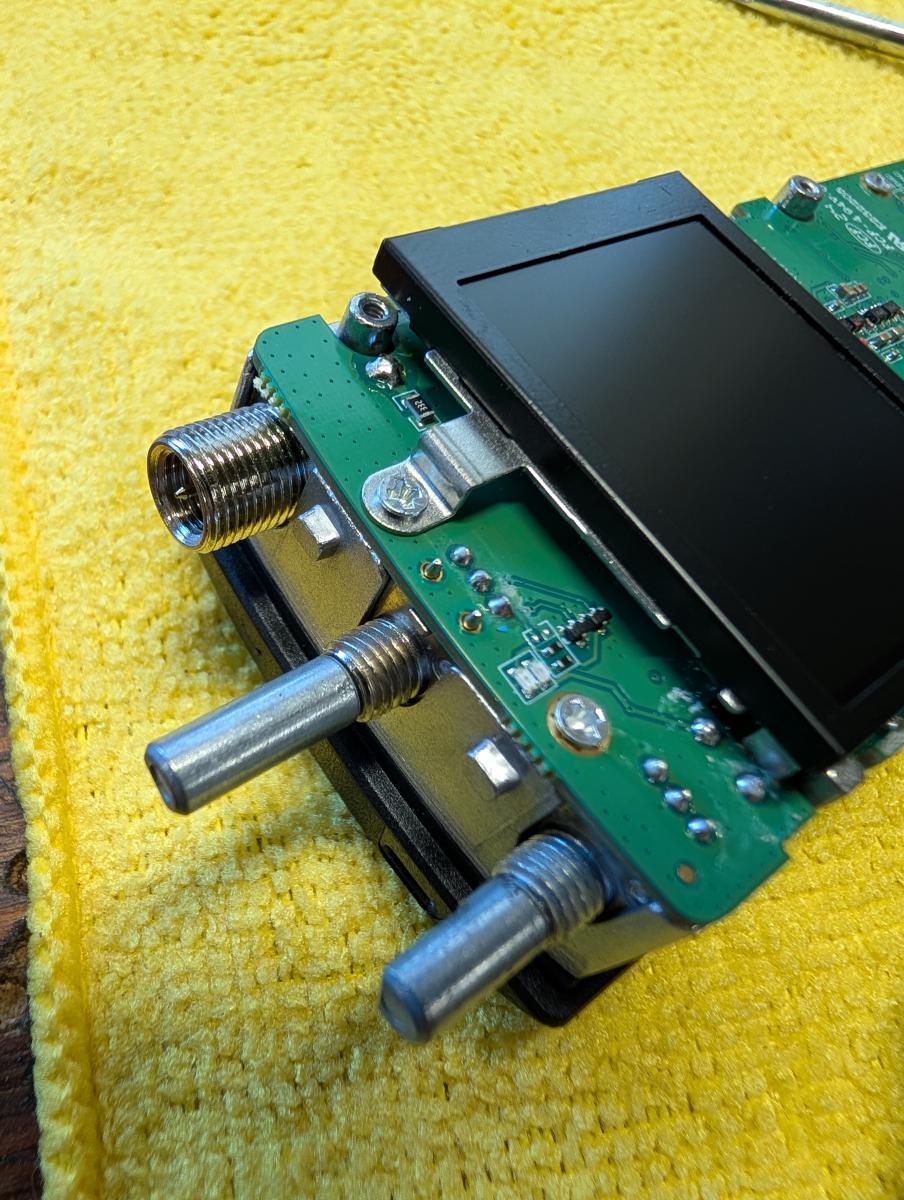
Here you can see the underside of the PCB, with the PCB screwed into the aluminum frame. The aluminum frame meant to take the lions share of the work supporting the SMA cable, but the tolerances are definitely more $35 radio than $200+ Japanese electronics wonder... and thus prone to wiggle issues it would seem.
So what was my ultimate solution? Resolder to be certain, and then add RTV Sealant... and lots of it!
Why RTV sealant? Well it dries to a firm supporting layer, but it has some give to it unlike epoxy. It'll provide support and cushion and flex along with adhesion... or so I hope. I'll honestly report back if this worked along with the resoldering.
One thing I can say for certain with the RTV sealant is I put it EVERYWHERE on the reassembly. Specifically I went big between the frame and the case, the headphone cover plate, the top of the frame and the case. Come to think of it, if you can name it, I sealed it and just about anything and everything else I could fathom to prevent ingress.
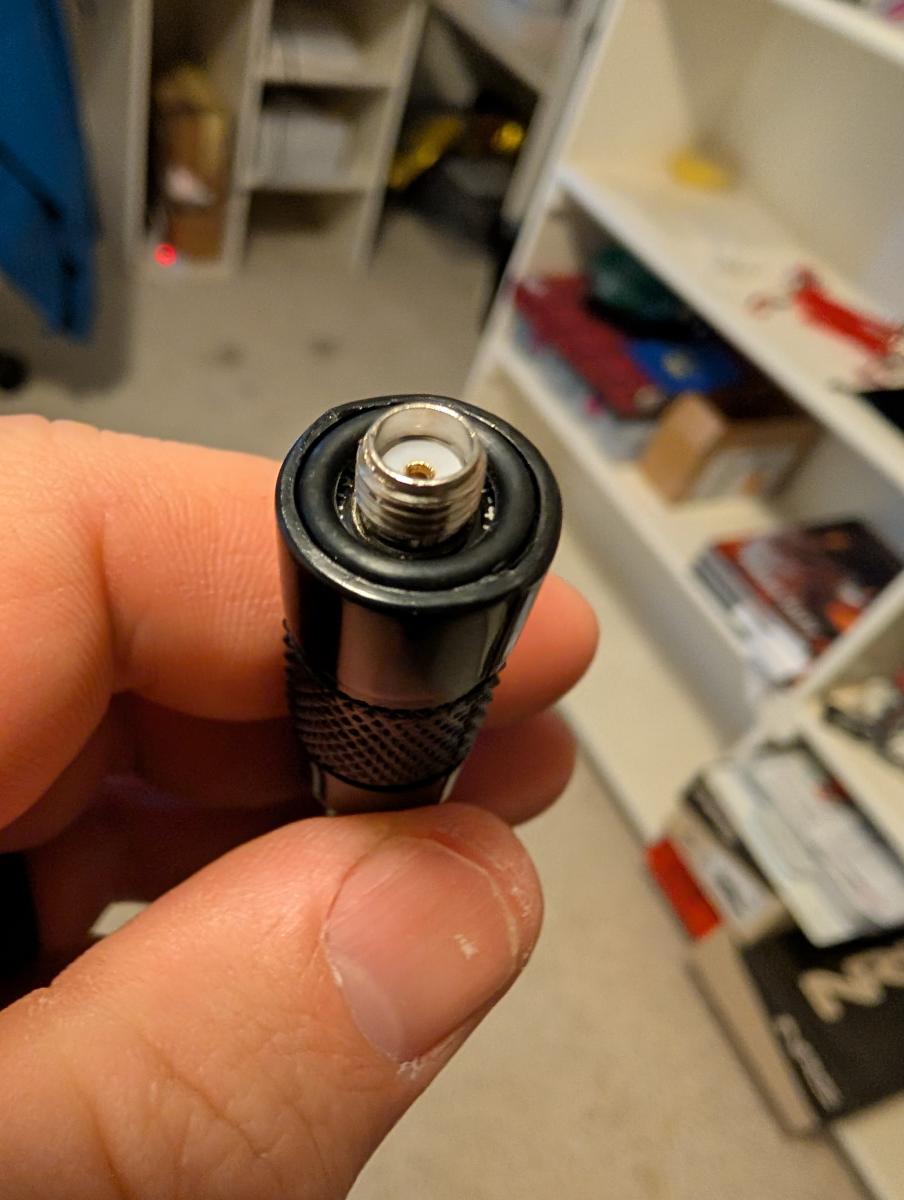
Then for even further overkill I put rubber O-rings under the knobs to further resist water ingress. Heck I even put an O-ring into the antenna connection as pictured above. This will help a smidge with water intrusion around the knos or antenna. While this isn't a guaranteed solution like a properly engineering o-ring based interface... it's hopefully better than nothing.
So I would contend that NOW this unit can claim water resistant... but waterproof? This wasn't even close and surely still has a long ways to go.
So How Does the Radio Actually Work?
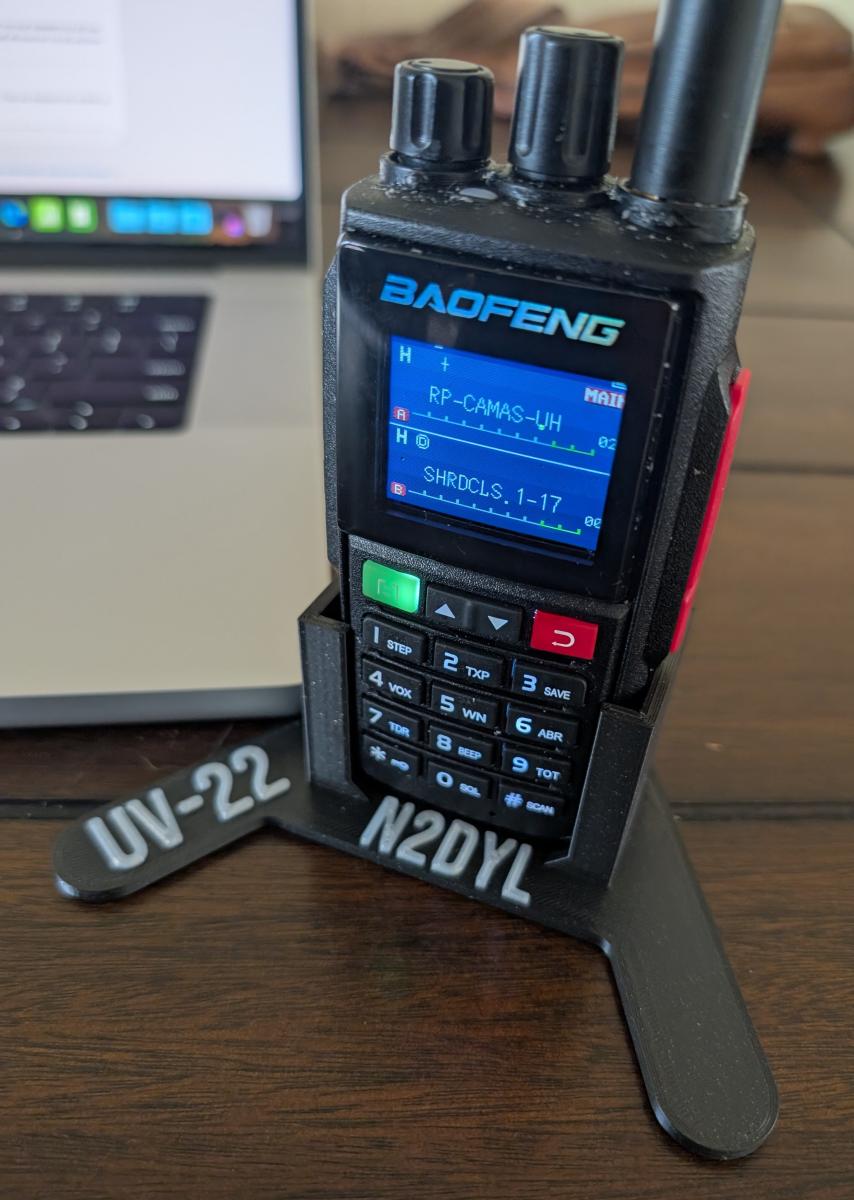
Short term testing thus far is good. I have noticed the pickup on the mic is a bit modest, requiring I pretty much put the radio right on my face. Whether that's a fault of the radio or my waterproofing... I'll never know, but with the mic within a 1/2" of my face I am reported as loud and clear! I've done some modest testing, along with joining my local repeater net W7AIA / 443.92500 daily at 6pm. Then I stumbled on another net doing a mock emergnecy response checkin, and I figured I'd report in for my zip code as well... which was fun and they were able to copy me despite being far away on a mobile handheld. Considering the amout of trees and junk and a few hills between me and that repeater... I think the fact this $35 radio hit it is pretty good!
I can't yet provide a long term review of the UV-22, but I did want to capture my initial experience and get this published to help folks program their UV-22. I'll in general be testing its durability in a fairly mobile situation as I like to take my radios skiing with me,
UV-22 Desk Stand
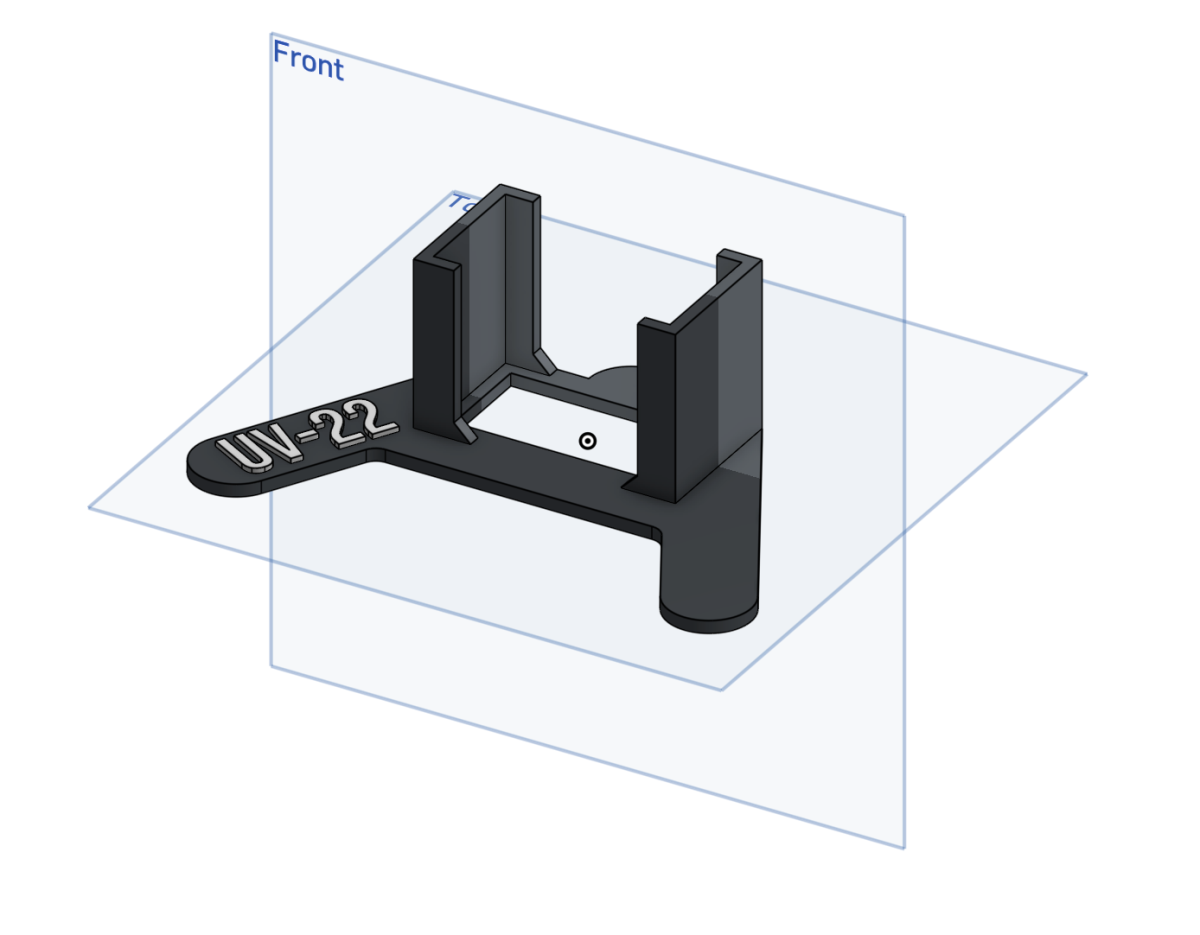
You may have noticed in a picture above that my radio is sitting in a nice little stand. I downloaded a stand for the UV-5RH hoping it would also fit this... and it didn't. However it was close enough that I was able to take some inspiration from the design, do a test print, make some adjustments... and now I've got a pretty good little customizable desktop stand you're all welcome to! I also added the model number, and my call sign, and printed them with glow in the dark filament because it's easy to read! You're free to print yours however you want of course, including just using a single filament and simply painting over anything you want to be able to easily read at a glance.
Relevant File / Print Links: